Periodic Table Intex-2 Concise Class-10 ICSE Chemistry Selina Solutions. We Provide Step by Step Answer of Intext-2, Exercise-1, ICSE Class-10. The given Solutions is according to the Latest editions. Visit official Website CISCE for detail information about ICSE Board Class-10.
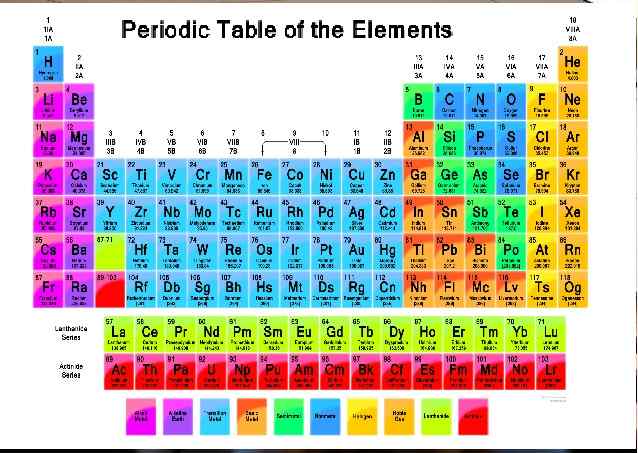
Periodic Table Intex-2 Concise Class-10 ICSE Chemistry Selina Solutions
| Board | ICSE |
| Book / Publication | Concise / Selina |
| Subject | Chemistry |
| Class | 10th |
| Writer | Dr SP Singh |
| Chapter-1 | Periodic Table (Periodic Properties and Variations of Properties) |
| Topics | Intext -2 |
| Edition | 2025-2026 |
Intext -2 Questions
Periodic Table Intex-2 ICSE Class-10 Concise Chemistry Selina Solutions Chapter-1
Page-10
Que-1: What do you understand by atomic size? State its unit.
Ans: Atomic size is the distance between the centre of the nucleus of an atom and its outermost shell.
It’s measured in Angstrom and Pico metre.
Que-2: Give the trends in atomic size on moving
(i) Down the group
(ii) Across the period left to right.
Ans: (i) The atomic size of an atom increases when we go down a group from top to bottom.
(ii) It decreases as we move from left to right in a period.
Que-3: Arrange the elements of second and third period in increasing order of their atomic size.(excluding noble gases).
Ans: Second Period: Fluorine < Neon < Oxygen < Nitrogen < Carbon < Boron < Beryllium < Lithium.
Third Period: Chlorine < Argon < Sulphur < Phosphorus < Silicon < Aluminum < Magnesium < Sodium.
Que-4: Why is the size of
(i) Neon greater than fluorine
(ii) Sodium is greater than magnesium.
Ans: (i) The size of Neon is bigger compared to fluorine because the outer shell of neon is complete(octet).As a result, the effect of nuclear pull over the valence shell electrons cannot be seen. Hence the size of Neon is greater than fluorine.
(ii) Since atomic number of magnesium is more than sodium but the numbers of shells are same, the nuclear pull is more in case of Mg atom. Hence its size is smaller than sodium.
Que-5: (i) Which is greater in size
(a) An atom or a cation?
(b) An atom or an anion?
(c) Fe2+ or Fe3+?
(d) Fluorine or oxygen
(ii) Which has higher E. A. Fluorine or Neon?
(iii) Which has maximum metallic character Na, Li or K?
Ans: (a) An atom.
(b) An anion.
(c) Fe2+
(d) Oxygen.
(ii) An anion is bigger than an atom since it is formed by gain of electrons and so the number of electrons are more than protons. The effective positive charge in the nucleus is less, so less inward pull is experienced. Hence the size expands.
(iii) Fe2+ is bigger than Fe3+ since Fe2+ has more number of electrons than Fe3+ and hence the inner pull by nucleus is less strong on it as compared to the pull on Fe3+.
Que-6: Arrange :
(i) Be, Li, C, B, N, O, F (in increasing metallic character)
(ii) Si, Na, Al, Mg, Cl, P, S (in decreasing non-metallic character)
Ans: (i) In increasing metallic character: F < O < N < C < B < Be < Li
(ii) In decreasing non-metallic character: Cl > S > P > Si > Al > Mg > Na
Que-7: State the trends in chemical reactivity:
(i) Across the period left to right
(ii) Down the group
Ans: (i) Across a period, the chemical reactivity of elements first decreases and then increases.
(ii) Down the group, chemical reactivity increases as the tendency to lose electrons increases down the group.
Que-8: A metal M forms an oxide having the formula M2O3. It belongs to the third period. Write the atomic number and valency of the metal.
Ans: Given: The metal belongs to the third period; there are three shells.
The chemical formula of the compound suggests that the valency of the metal is +3.
That means the valence electrons are 3; hence, it belongs to the third group.
Thus, the element must have the electronic configuration 2, 8, 3.
That means the total number of electrons is 13.
Valency = 3, Atomic number = 13
Que-9: An element X belong to 3rd period and 17th group, state
(i) no of valence electrons in it.
(ii) name of the element.
(iii) name the family to which it belongs.
(iv) write the formula of the compound formed when it reacts with….
Ans: (i) The element from the 17th group has 7 electrons in its outermost shell.
(ii) The name of the element is chlorine.
(iii) Chlorine belongs to the halogen family.
(iv) The element has three electrons in its outermost shell which it can donate; hence, its valency is three. While the valency of chlorine is 1. Thus, which is Aluminium can donate three electrons, and chlorine can accept 1 electron to get the stable electronic configuration.
Therefore, the formula of the compound is AlCl3.
Que-10: The given table shows elements with same number of electrons in its valence shell.
| Elements | A | B | C |
| m.p | 63.0 | 180.0 | 97.0 |
State :
(i) Whether these elements belong to same group or period.
(ii) Arrange them in order of increasing metallic character.
Ans: (i) Yes, these elements belong to the same group but are not from the same period.
(ii) We know that m.p. decreases on going down the group. Hence, from the above table, the elements can be ordered according to their period as follows:
| Elements | B | C | A |
| m.p. | 180.0 | 97.0 | 63.0 |
The metallic character increases as one moves down the group.
Hence, the order of the given elements with increasing metallic character is as follows:
Que-11: Which one of the following has the largest atomic radius?
(i) Sodium
(ii) Potassium
(iii). Magnesium
(iv) Aluminium
Ans: Correct option: (ii) Potassium
Que-12: Which one has the largest size?
(i) Br
(ii) I
(iii) . I-
(iv) Cl
Ans: Correct option: (iii) I-
Que-13: The metals of group 2 from top to bottom are Be, Mg, Ca, Sr and Ba.
(i) Which one of these elements will form ions most readily and why?
(ii) State the common feature in their electronic configuration.
Ans: (i) Barium will form ions most readily as the outermost valence electron which experiences the least force of attraction by positively charged nucleus can be given away readily to form cations.
(ii) All Group II elements have two valence electrons.
Que-14: Write the number of protons, neutrons and electronic configuration of 39K1931K15 . Also state their position in the periodic table.
Ans:
For 39K19
No. of Protons = 19
No. of Neutrons = 39 – 19 = 20
Electronic Configuration = 2, 8, 8, 1
Position in periodic table = 4th period (as it has 4 shells) & 1st group (as it has one valence electron).
For 31K15P:
No. of Protons = 15
No. of Neutrons = 31 – 15 = 16
Electronic Configuration = 2, 8, 5
Position in periodic table = 3rd period (as it has 3 shells) & 15th group (as it has five valence electrons).
Que-15: Name the element which has:
(i) two shells, both of which are completely filled with electrons?
(ii) the electronic configuration 2, 8, 3?
(iii) a total of three shells with five electrons in its valence shell?
(iv) a total of four shells with two electrons in its valence shell.
(v) twice as many electrons in its second shell as in its first shell?
Ans: (i) Neon (Atomic number = 10)
Electronic configuration = 1s22s22p6
(ii) Electronic configuration = 2, 8, 3
Hence, atomic number = 13
The element having atomic number 13 is Aluminium.
(iii) The element has a total of three shells; hence, the element belongs to the third period. Five valence electrons indicate that the element belongs to the fifth group (VA). Hence, the element is phosphorus.
(iv) Twice as many electrons in its second shell as in its first shell indicates electronic configuration 1s22s2.
(v) From the electronic configuration, the total number of electrons is 4. We know that,
Number of electrons = Number of protons = Atomic number
The element with atomic number 4 is beryllium
Que-16: An element barium has atomic number 56. Look up its position in the periodic table and answer the following questions:
(i) Is it a metal or a non-metal?
(ii) Is it more or less reactive than calcium?
(iii) What is its valency?
(iv) What will be the formula of its phosphate?
(v) Is it larger or smaller than caesium (Cs) in size?
Ans: (i) It belongs to group II and has 2 valence electrons, so it is a metal.
(ii) Barium is placed below calcium in the group. Since the reactivity increases below the group, barium is more reactive than calcium.
(iii) It needs to lose 2 valence electrons to complete its octet configuration, so its valency is 2.
(iv) The formula of its phosphate will be Ba3 (PO4)2.
(v) As we move from left to right in a period, the size decreases, so it will be smaller than caesium.
Que-17: In group I of the periodic table, three elements X,Y and Z have ionic radii 1.33 Å, 0.95Å and 0.60Å , respectively. Giving a reason, arrange them in the order of increasing atomic numbers in the group.
Ans: Since the size of the atom increases down the group, the ionic radii will also increase. Hence, the order of increasing atomic numbers in the group is Z < Y < X.
Que-18: Explain why are the following statements are not correct:
(i) All groups contain metal and non-metal.
(ii) Atoms of elements in the same group have same number of electron(s).
(iii) Non-metallic character decreases across a period with increase in atomic number.
(iv) Reactivity increases with atomic number in group as well as in a period.
Ans: (i) All groups do not contain both metals and non-metals. Group I and II contain only metals.
(ii) Atoms of elements in the same group have same number of valence electrons. They have same number of electrons present in their outermost shell.
(iii) The non-metallic character increases across a period with increase in atomic number. This is because across the period, the size of atom decreases and the valence shell electrons are held more tightly.
(iv) On moving from left to right in a period, the reactivity of elements first decreases and then increases, while in groups, chemical reactivity of metals increases going down the group whereas reactivity of non-metals is decreases down the group.
Que-19:
(i) (State the number of elements in Period 1, Period 2 and Period 3 of the periodic table. Name them.
(ii) What is the common feature of the electronic configuration of the elements at the end of Period 2 and Period 3?
(iii) If an element is in Group 17, it is likely to be ______ [metallic/non-metallic] in character, while with one electron in its outermost energy level (shell), then it is likely to be _______ [metallic/non-metallic].
(iv )In Period 3, the most metallic element is __________ (sodium/magnesium/aluminium)
Ans: (i) Period 1:
Number of elements = 2
Hydrogen, helium
Period 2:
Number of elements = 8
Lithium, beryllium, boron, carbon, nitrogen, oxygen, fluorine, neon
Period 3:
Number of elements = 8
Sodium, magnesium, aluminium, silicon, phosphorus, sulphur, chlorine, argon
(ii) A common feature of the electronic configuration of the elements at the end of Period 2 and Period 3 is that the atoms have 8 electrons in their outermost shell.
(iii) If an element is in Group 17, it is likely to be non-metallic in character, while with one electron in its outermost energy level (shell), then it is likely to be metallic.
(iv) In Period 3, the most metallic element is sodium.
Que-20: Complete the following sentences choosing the correct word or words from those given in brackets at the end of each sentence:
The properties of the elements are a periodic function of their _____ (atomic number, mass number, relative atomic mass).
Moving across a _____ of the periodic table, the elements show increasing _____ character (group, period, metallic, non-metallic).
The elements at the bottom of a group would be expected to show _____ metallic character than the element at the top (less, more).
The similarities in the properties of a group of elements are because they have the same _____ (electronic configuration, number of outer electrons, atomic numbers).
Ans: (i)The properties of the elements are a periodic function of their atomic number.
(ii)Moving across a period of the periodic table, the elements show increasing non-metallic character.
(iii)The elements at the bottom of a group would be expected to show more metallic character than the elements at the top.
(iv)The similarities in the properties of a group of elements are because they have the same number of outer electrons.
Que-21: Give reasons for the following:
(I) The size of a Cl- ion is greater than the size of a Cl atom.
(ii) Argon atom is bigger than chlorine atom.
(iii) Ionisation potential of the element increases across a period.
(iv) Inert gases do not form ion.
Ans: (i) An anion is formed by the gain of electrons., the number of electrons is more than the number of protons. The effective positive charge in the nucleus is less, so the less inward pull is experienced. Hence, the size expands.
(ii) The Argon is the next element after chlorine in the third period.
In a period, the size of an atom decreases from left to right due to an increase in nuclear charge with an increase in the atomic number. However, the size of the atoms of inert gases is bigger than the previous atom of halogen in the respective period. This is because the outer shell of inert gases is complete. They have the maximum number of electrons in their outermost orbit; thus, electronic repulsion are maximum. Hence, the size of the atom of an inert gas is bigger.
(iii) Ionization potential of the element increases across a period because the atomic size decreases due to an increase in the nuclear charge, and thus, more energy is required to remove the electron(s).
(iv) To attain stability, atoms need to complete their octet by sharing, losing or gaining electrons. In inert gases, the octet is complete, and they do not need to gain, lose or share electrons. Hence, inert gas elements do not form ions.
—: End of Periodic Table Intex-2 Concise Class-10 ICSE Chemistry Selina Solutions Ch-1 : –
Return to:- Concise Selina Chemistry for ICSE Class-10 Solutions
Please Share with Your Friends if Helpful
Thanks