Propagation Of Sound Waves Class-9 Exe-8A MCQs Concise Physics ICSE Selina Solutions Ch-8. In this article you would learn to solve MCQS on Production and Propagation of Sound Waves. Visit official Website CISCE for detail information about ICSE Board Class-9.
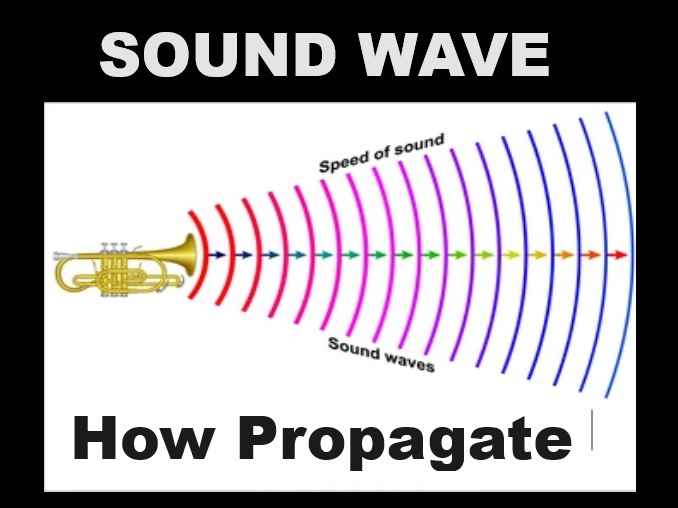
Propagation Of Sound Waves Class-9 Exe-8A MCQs Concise Physics ICSE Selina Solutions Ch-8
| Board | ICSE |
| Class | 9 |
| Subject | Physics |
| Writer / Publication | Concise Selina Publishers |
| Chapter-8 | Propagation Of Sound Waves |
| Exe-8A | Production and Propagation of Sound Waves |
| Topics | Solution of Exe-8A MCQs Type |
| Academic Session | 2025-2026 |
Production and Propagation Of Sound Waves
Propagation Of Sound Waves Class-9 Exe-8A MCQs Concise Physics ICSE Selina Solutions Ch-8.
Page 201 (Choose the correct answer from the options give below).
Que-1: The waves carry …………… energy of the vibrating particles with them so as to produce a sensation of hearing in our ears.
(a) light
(b) mechanical
(c) chemical
(d) nuclear
Ans: (b) mechanical
Hint- Sound waves produce the sensation of hearing in our ears. They are mechanical waves that need a medium to travel, like air or water. When an object vibrates, it creates disturbances in the surrounding medium, propagating as mechanical waves. These waves carry the energy of the vibrating particles, allowing us to perceive sound.
Que-2: Identify the correct statements :
(i) A material medium is necessary for the propagation of sound from one place to another.
(ii) The medium must have inertia.
(iii) The medium must be inelastic.
(iv) The medium must be frictionless.
(a) (i) and (ii)
(b) (i), (ii) and (iii)
(c) (i), (ii) and (iv)
(d) (ii), (iii) and (iv)
Ans: (c) (i), (ii) and (iv)
Hint- A material medium is necessary for the propagation of sound from one place to another.
Requisites of the medium are :
- The medium must be elastic.
- The medium must have inertia.
- The medium must be frictionless.
Que-3: The correct statement is:
(a) Sound and light both require medium for propagation
(b) Sound can travel in vacuum, but light cannot
(c) Sound needs medium, but light does not need medium for it’s propagation
(d) Sound and light both can travel in vacuum
Ans: (c) Sound needs medium, but light does not need medium for it’s propagation
Hint- Sound waves are mechanical waves. So, they require a medium, such as air, water, or solids, to travel through. In contrast, light waves are electromagnetic waves that can propagate through vacuum as well as various mediums. Light does not depend on a material medium for its transmission and can travel through empty space.
Que-4: Sound in air propagates in form of:
(a) Longitudinal wave
(b) Transverse wave
(c) Both longitudinal and transverse wave
(d) Neither longitudinal nor transverse wave
Ans: (a) Longitudinal wave
Hint- The two kinds of waves in form of which sound travels in a medium are:
- Transverse waves — The wave in which the particles of medium vibrate about their mean positions, in a direction perpendicular to the direction of propagation of the wave.
Transverse waves can only be produced in solids and on the surface of liquids. They cannot be produced inside liquids and inside gases. - Longitudinal waves — The wave in which the particles of medium vibrate about their mean positions, in the direction of propagation of sound.
Longitudinal waves can be produced in solids, liquids as well as gases.
Hence, sound in air propagates in form of longitudinal wave.
Que-5: The S.I. unit of wavelength is :
(a) metre
(b) hertz
(c) second
(d) m/s
Ans: (a) metre
Hint- The distance travelled by the wave in one time period of vibration of a particle of the medium, is called its wavelength. Its S.I. unit is metre.
Que-6: The position of maximum upward displacement of medium particles in a transverse wave is known as :
(a) trough
(b) compression
(c) rarefaction
(d) crest
Ans: (d) crest
Hint- A transverse wave is composed of crest and trough. The position of maximum upward displacement of medium particles in a transverse wave is known as crest and the position of maximum downward displacement is called trough.
Que-7: The wave in which the particles of a medium vibrate about their mean position in a direction …………… to the direction of propagation of the wave is called transverse wave.
(a) parallel
(b) similar
(c) perpendicular
(d) none of the above
Ans: (c) perpendicular
Hint- In a transverse wave, the oscillations of the particles occur in a direction that is perpendicular to the wave’s motion as it travels through the medium.
Que-8: In a longitudinal wave, the distance between two consecutive …………… is equal to …………… wavelength(s).
(a) compressions, one
(b) compressions, two
(c) crests, one
(d) crests, two
Ans: (a) compressions, one
Hint- In a longitudinal wave, the distance between two consecutive compressions (regions of high pressure) is equal to one wavelength.
Que-9: Transverse waves can be produced inside :
(a) solids
(b) liquids
(c) gases
(d) both (b) and (c)
Ans: (a) solids
Hint- Transverse waves can only be produced in solids and on the surface of liquids. They cannot be produced inside liquids and gases.
Que-10: Longitudinal waves can be produced in :
(a) solids
(b) liquids
(c) gases
(d) All of the above
Ans: (d) All of the above
Hint- The wave in which the particles of the medium vibrate about their mean positions, in a direction of propagation of sound, is called a longitudinal wave. Longitudinal waves can be produced in solids, liquids and gases.
Que-11: The maximum displacement of the medium particle on either side of its mean position is called …………… of the wave.
(a) frequency
(b) time period
(c) wavelength
(d) amplitude
Ans: (d) amplitude
Hint- When a wave passes through a medium, the maximum displacement of the particle of the medium on either side of its mean position, is called the amplitude of the wave.
Que-12: The number of vibrations made by a particle of a medium in one second is called …………… of the wave.
(a) frequency
(b) time period
(c) wavelength
(d) wave velocity
Ans: (a) frequency
Hint- The number of vibrations made by a particle of a medium in one second is called the frequency of the wave. It is denoted by letter f.
Que-13: The time taken by a particle of a medium to complete its one vibration is called:
(a) frequency
(b) time period
(c) wave velocity
(d) amplitude
Ans: (b) time period
Hint- The time taken by a particle of a medium to complete its one vibration is called time period of wave. It is denoted by T. Its S.I. unit is second (s).
Que-14: At compressions, the density and pressure of a medium is ……………, while at rarefactions the density and pressure of a medium is ……………
(a) minimum, minimum
(b) minimum, maximum
(c) maximum, maximum
(d) maximum, minimum
Ans: (d) maximum, minimum
Hint- At compressions, the density and pressure of a medium is maximum, while at rarefactions the density and pressure of a medium is minimum.
Que-15: The correct relation between wavelength, wave velocity and frequency is :
(a) V – f = λ
(b) V = fλ
(c) fV = λ
(d) λV = f
Ans: (b) V = fλ
Hint- The relation between wave velocity V, frequency f and wavelength λ of a wave is : V = f λ
Que-16: Wave velocity is also defined as the ………….. with which ………….. is transferred from one place to another place by wave motion.
(a) speed, energy
(b) speed, compression
(c) speed, rarefaction
(d) velocity, pressure
Ans: (a) speed, energy
Hint- Wave velocity is also defined as the speed with which energy is transferred from one place to another place by wave motion.
Page 202
Que-17: For sound to travel through medium, it need not :
(a) be rigid
(b) be elastic
(c) possess inertia
(d) be frictionless
Ans: (a) be rigid
Hint- A material medium is necessary for the propagation of sound from one place to another.
Requisites of the medium are :
- The medium must be elastic.
- The medium must have inertia.
- The medium must be frictionless.
Que-18: The speed of sound in air is not affected by change in :
(a) temperature
(b) moisture
(c) pressure
(d) density
Ans: (c) pressure
Hint- The speed of sound in a gas is independent of pressure. Hence, there is no effect on sound when the pressure of air is changed.
Que-19: The speed of sound in a gas is given by :
(a) V = √P/γρ
(b) V = √γP/ρ
(c) V = √γρ/P
(d) V = √γρP
Ans: (b) V = √γP/ρ
Hint- According to Laplace, when sound travels in a gas, during the formation of compression and rarefaction, there is no exchange of heat in the medium i.e., the propagation of sound is an adiabatic change.
Hence, the speed of sound in a gas is given by V = √γP/ρ
Que-20: The speed of sound in air at 0°C is nearly :
(a) 1450 m s-1
(b) 450 m s-1
(c) 5100 m s-1
(d) 330 m s-1
Ans: (d) 330 m s-1
Hint- The speed of sound in air at 0°C is 330 m s-1
Que-21: The speed of sound in a gas is related to temperature (in Kelvin) as :
(a) directly proportional to temperature.
(b) directly proportional to the square root of temperature.
(c) inversely proportional to temperature.
(d) inversely proportional to the square root of temperature.
Ans: (b) directly proportional to the square root of temperature.
Hint- The speed of sound in a gas increases with the increase in temperature of the gas. The reason is that with the increase in temperature, the density of the gas decreases and consequently the speed of sound increases. The speed of sound in a gas is directly proportional to the square root of temperature.
Que-22: Factors affecting the speed of sound are :
(a) temperature
(b) density
(c) pressure
(d) only (a) and (b)
Ans: (d) only (a) and (b)
Hint- Factors affecting the speed of sound are:
- density
- temperature
- humidity and
- direction of wind.
Que-23: The speed of light in air is:
(a) 3 x 10⁸ m s-1
(b) 330 m s-1
(c) 5100 m s-1
(d) 3 x 10¹⁰ m s-1
Ans: (a) 3 x 10⁸ m s-1
Hint- The speed of light in air is 3 x 10⁸ m s-1
—: End of Propagation Of Sound Waves Class-9 Exe-8A MCQs Concise Physics ICSE Selina Solutions Ch-8. :—
Return to:- Concise Selina Physics ICSE Class-9 Solutions
Thanks