Propagation of Sound Waves Class-9 Exe-8B MCQs Concise Physics ICSE Selina Solutions Ch-8. In this article you would learn to solve MCQS on Infrasonic, Sonic and Ultrasonic Frequency. Visit official Website CISCE for detail information about ICSE Board Class-9 Physics.
Propagation of Sound Waves Class-9 Exe-8B MCQs Concise Physics ICSE Selina Solutions Ch-8
| Board | ICSE |
| Class | 9 |
| Subject | Physics |
| Writer / Publication | Concise selina Publishers |
| Chapter-8 | Propagation of Sound Waves |
| Exe-8B | Infrasonic, Sonic and Ultrasonic Frequency |
| Topics | Solution of Exe-8B MCQs Type |
| Academic Session | 2025-2026 |
Infrasonic, Sonic and Ultrasonic Frequency
Propagation of Sound Waves Class-9 Exe-8B MCQs Concise Physics ICSE Selina Solutions Ch-8
Page 205 (Choose the correct answer from the options given below).
Que-1: The audible frequency range of sound is :
(a) 5 Hz – 10 kHz
(b) 10 Hz – 20 kHz
(c) 20 Hz – 20 kHz
(d) 25 Hz – 40 kHz
Ans: (c) 20 Hz – 20 kHz
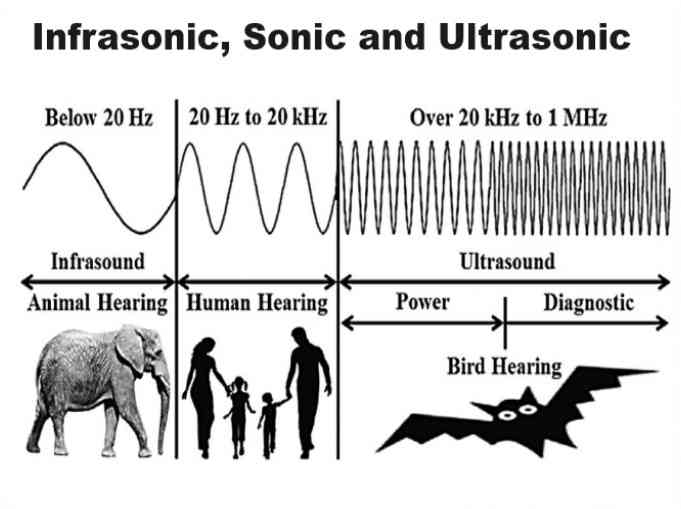
Hint- The audible frequency range of sound for the average human ear is generally considered to be between 20 Hz and 20 kHz. It is called the sonic or audible sound.
Que-2: A man can hear a sound of frequency :
(a) 1 Hz
(b) 1000 Hz
(c) 200 Hz
(d) 5 MHz
Ans: (b) 1000 Hz
Hint- The audible range of frequency for humans is 20 Hz to 20 kHz. Hence, a man can hear the sound of frequency 1000 Hz.
Que-3: The human ear is most sensitive in the range of …………… where it can hear a feeble sound.
(a) 1000 Hz — 1500 Hz
(b) 1500 Hz – 1800 Hz
(c) 2000 Hz – 3000 Hz
(d) 100 Hz – 500 Hz
Ans: (c) 2000 Hz – 3000 Hz
Hint- The human ear is most sensitive in the range of 2000 Hz – 3000 Hz where it can hear a feeble sound.
Que-4: The speed of ultrasound in air is :
(a) the same as audible sound
(b) less than audible sound
(c) more than audible sound
(d) equal to the speed of light
Ans: (a) the same as audible sound
Hint- The speed of ultrasound in air is the same as audible sound i.e. 330 m s-1 .
Que-5: Echo-cardiography is used to obtain the image of
(a) lungs
(b) liver
(c) heart
(d) kidney
Ans: (a) heart
Hint- Echo-cardiography is used to obtain the image of heart.
Que-6: Elephants produce ……………sound :
(a) ultrasonic
(b) infrasonic
(c) supersonic
(d) none of the above
Ans: (b) infrasonic
Hint- Elephants and whales can produce infrasonic sounds of frequencies less than 20 Hz.
Que-7: …………… can hear the highest frequency range of sound.
(a) Whales
(b) Dogs
(c) Cats
(d) Bats
Ans: (d) Bats
Hint- Bats can hear the highest frequency range of sound of 100 kHz.
Que-8: Choose the correct statement :
(a) Ultrasonic waves travel faster than supersonic waves.
(b) Sonic waves travel faster than supersonic waves.
(c) Sonic waves travel faster than ultrasonic waves.
(d) Sonic and ultrasonic waves travel with the same speed.
Ans: (d) Sonic and ultrasonic waves travel with the same speed.
Hint- Sonic and ultrasonic waves travel with the same speed of 330 m s-1 .
Que-9: The sound of frequency less than 20 Hz is called :
(a) supersonic
(b) infrasonic
(c) ultrasonic
(d) ultrasound
Ans: (b) infrasonic
Hint- The sound of frequency in the range 20 Hz to 20 kHz is called the sonic or audible sound; the sound of frequency less than 20 Hz is called infrasonic and greater than 20 kHz is called ultrasonic.
Page 206
Que-10: The properties of ultrasound that make it useful, are:
(a) High power and high speed
(b) High power and good directivity
(c) High frequency and high speed
(d) High frequency and bending around the objects
Ans: (b) High power and good directivity
Hint- Properties of ultrasound that make it useful to us are:
- The energy carried by ultrasound is very high.
- The ultrasound can travel along a well defined straight path. It does not bend appreciably at the edges of an obstacle because of it’s small wavelength (i.e., it has high directivity).
Que-11: Sonar makes use of:
(a) Infrasonic sound
(b) Ultrasound
(c) Supersonic sound
(d) Light
Ans: (b) Ultrasound
Hint- In SONAR (abbreviated form of sound navigation and ranging), to detect and find the distance of objects under water, ultrasound is used.
—: End of Propagation of Sound Waves Class-9 Exe-8B MCQs Concise Physics ICSE Selina Solutions Ch-8. :—
Return to :- Concise Selina Physics ICSE Class-9 Solutions
Thanks