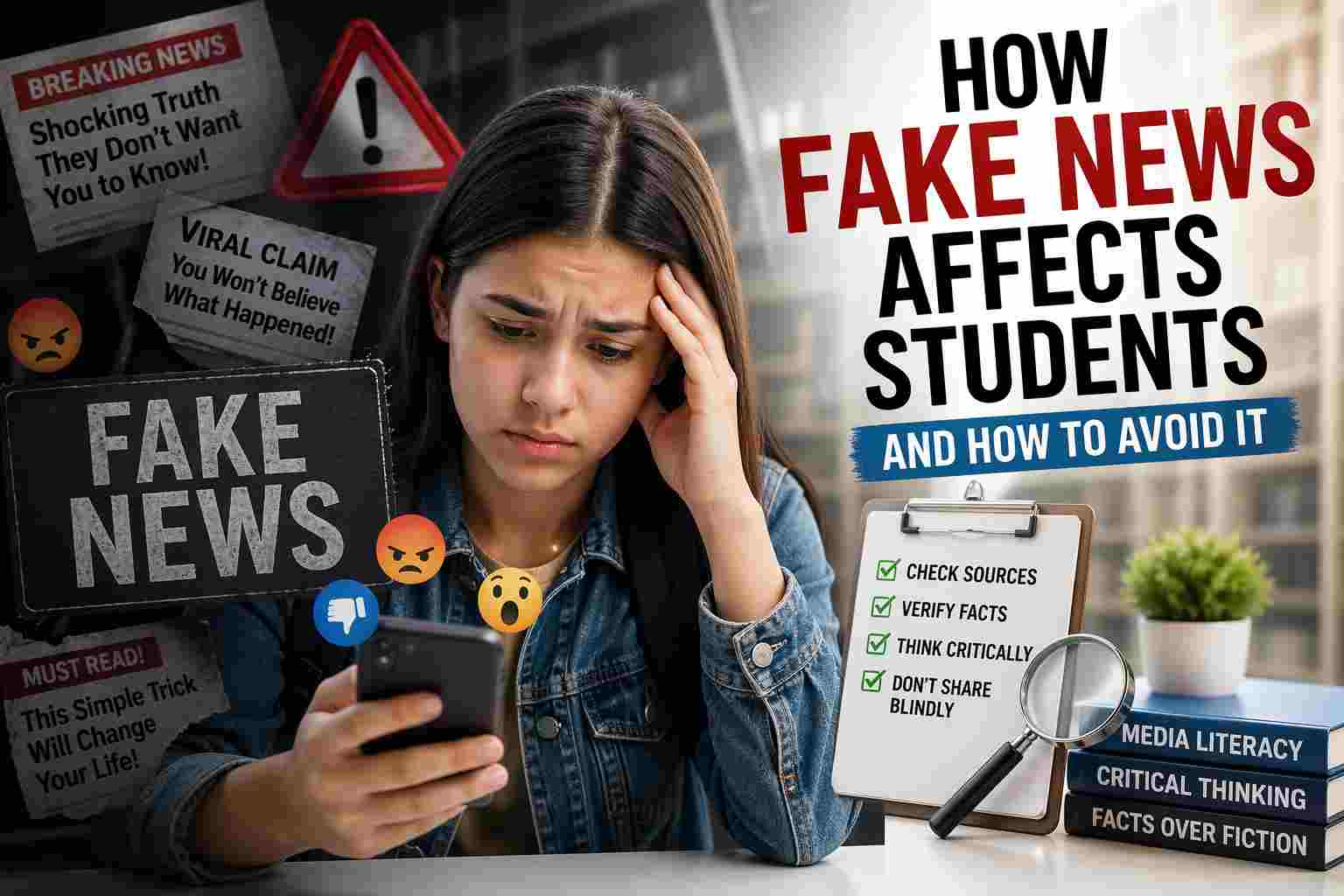
In this blog, we study How Fake News Affects Students and How to Avoid It. Fake news refers to false or misleading information that is presented as real news. It often spreads quickly through social media platforms, messaging apps, and websites. Many times, people share information without checking if it is true, which helps fake news travel even faster. Eye-catching headlines, edited images, and emotional content are commonly used to grab attention and make people believe it.
Introduction
In today’s digital world, students are constantly exposed to information through the internet, social media, and online platforms. While this makes learning easier, it also increases the risk of encountering fake news. Fake news can confuse students, spread misinformation, and even affect their thinking and decisions. Therefore, it is important for students to understand its impact and learn how to avoid it.
How Fake News Affects Students
1. Creates Confusion and Misinformation
Students may struggle to identify what is true or false. This can lead to misunderstanding important topics, especially in subjects like science, history, or current affairs.
2. Affects Academic Performance
Relying on incorrect information for assignments, projects, or exams can result in poor performance and loss of marks.
3. Impacts Critical Thinking Skills
When students believe everything they see online without questioning it, their ability to think critically and analyze information becomes weaker.
4. Causes Fear and Anxiety
Fake news often includes exaggerated or alarming content, which can create unnecessary stress and panic among students.
5. Spreads Negative Influence
Some fake news promotes rumors, hate, or harmful ideas that can negatively influence young minds.
How Students Can Avoid Fake News
1. Check the Source
Always verify whether the information comes from a trusted and reliable website or organization.
2. Read Beyond Headlines

Do not believe news just by reading the headline. Read the full article to understand the actual content.
3. Cross-Verify Information
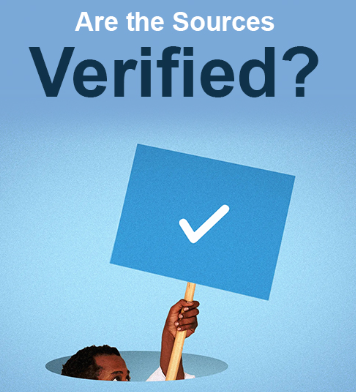
Check the same news on multiple platforms to confirm if it is true.
4. Look for Evidence
Reliable news usually includes facts, data, or references. Be cautious if the information lacks proof.
5. Avoid Sharing Without Verification
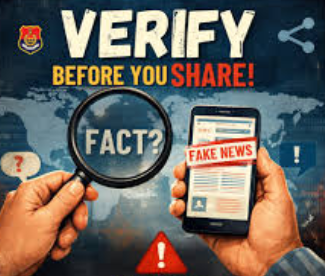
Do not forward or share any news unless you are sure it is accurate.
6. Use Fact-Checking Websites
There are many websites available that help verify whether news is real or fake.
Conclusion
Fake news is a serious issue in the digital age, especially for students who rely heavily on online information. It can affect their education, mindset, and overall awareness. By developing good habits like verifying sources, thinking critically, and being cautious while sharing information, students can protect themselves from misinformation. Being aware and responsible digital users is the key to staying informed and safe.
–: End of How Fake News Affects Students and How to Avoid It. :–
–: also visit : —
- Top AI Tools Every Student Should Know
- Managing Stress and Anxiety in Competitive Exams
- Fun Chemistry Experiments Using Household Items
Please share with your friends
Thanks